
Max Planck Institute fully funded scholarship in Germany
Max Planck Institute fully funded scholarship in Germany Apply for fully funded scholarships from here Studying at the prestigious Max Planck Institute for the Study of Crime, Security and Law in Germany offers a transformative academic experience for international scholarship students. This institution provides a unique fully funded scholarship opportunity that covers not only tuition but also living expenses, ensuring scholars can focus entirely on groundbreaking research. The program includes comprehensive study visa sponsorship assistance, making the immigration pathway smoother for successful applicants. Below is a detailed breakdown of what this opportunity entails for international students seeking to advance their careers in criminology, law, and security studies.
| Field | Details |
|---|---|
| Scholarship Name | Max Planck Institute PhD Fellowship |
| Host Country | Germany |
| Eligible Nationalities | All international students (Non-EU prioritized) |
| Study Level | PhD and Postdoctoral Research |
| Scholarship Type | Full Funding (Merit-based) |
| Funding Coverage | Tuition, Stipend, Insurance, Research Costs |
| Application Deadline | Varies (Typically Nov-Jan) |
| Official Website Link | https://www.mpg.de |
2. Complete Financial Benefits and Cost Breakdown
The financial package for researchers at the Max Planck Institute is designed to eliminate economic barriers, serving as a complete education loan alternative for international scholars. Recipients receive extensive financial aid for international students scholarship , covering not just research costs but also monthly living expenses, which is crucial for managing student finance options effectively. This comprehensive support allows researchers to focus entirely on their dissertation and publications without the stress of tuition fees or daily expenses.
| Benefit | Amount or Details |
|---|---|
| Full Tuition Fee Waiver | 100% coverage of university fees |
| Monthly Living Stipend | €2,000 – €3,500 per month |
| Research Grant | €5,000 annual allowance |
| Health and Medical Insurance | Comprehensive German public insurance |
| Conference Travel Allowance | Up to €1,500 per year |
| Visa Fee Reimbursement | Reimbursement of application costs |
| Family Allowance | Additional stipend for married scholars |
Students who do not get full funding can also explore international student loans, education financing from banks, and partial scholarship combinations to cover remaining costs. Many German banks offer education loan without collateral options for high-achieving students, while DAAD provides specific grants. It’s also wise to consult an education consultant for Germany to identify external funding sources or university-specific grants that might supplement the main fellowship.
3. Why You Need an Immigration Consultant or Education Advisor
Navigating the complex process of researching and applying to a Max Planck Institute requires expert guidance, and working with a qualified immigration consultant significantly boosts your chances of success. These professionals specialize in visa sponsorship for international students and understand the nuances of the German academic immigration pathway. Immigration lawyers can help with visa rejection appeals, document verification, and PR pathway planning, which is critical if you aim to stay long-term in Germany. Many students hire student visa consultants to avoid common mistakes that lead to delays or refusals, while an international student recruitment agency can also assist with finding the right doctoral supervisor and navigating the application portal. Their expertise in education financing options and immigration consultant fees transparency can save you both time and money.
4. Available Study Programs for International Students
The Max Planck Institute offers a diverse range of research-focused programs tailored to meet the demands of the global security and legal job market. From cutting-edge criminology to traditional legal studies, each program is designed to provide both theoretical knowledge and practical research skills. Below are 10 popular research areas that attract international students due to their high employability and competitive salaries.
Criminology and Criminal Justice
This program focuses on criminal behavior, penology, and victimology, preparing students for roles in government agencies and research institutes. Graduates often secure positions with high starting salaries in federal police or intelligence services. Job opportunities include criminal profiler, policy analyst, and academic researcher.
International Law and Human Rights
Germany’s central role in EU law makes this program prestigious, offering clinical training alongside research opportunities. Students gain hands-on experience in international courts, making them competitive for roles in NGOs and the UN. The salary potential for international lawyers is among the highest in the legal sector.
Cybersecurity and Digital Forensics
Designed for future tech leaders, this program covers data protection, cybercrime investigation, and digital evidence. The institute’s connections with tech firms provide excellent internship and job placement opportunities. Graduates often move into consulting or executive roles with attractive compensation packages.
Forensic Psychology and Psychiatry
With a focus on the intersection of mental health and criminal behavior, this program equips students with skills for correctional facilities and legal consulting. Germany’s advanced healthcare system creates a steady demand for forensic experts. Mid-career salaries for experienced psychologists are significantly above the national average.
Security Policy and Strategic Studies
This interdisciplinary program explores geopolitical risks, terrorism, and defense strategies, ideal for students aiming for careers in think tanks or government. Graduates often work with NATO, EU institutions, or private security firms. The program also provides a solid foundation for further political studies.
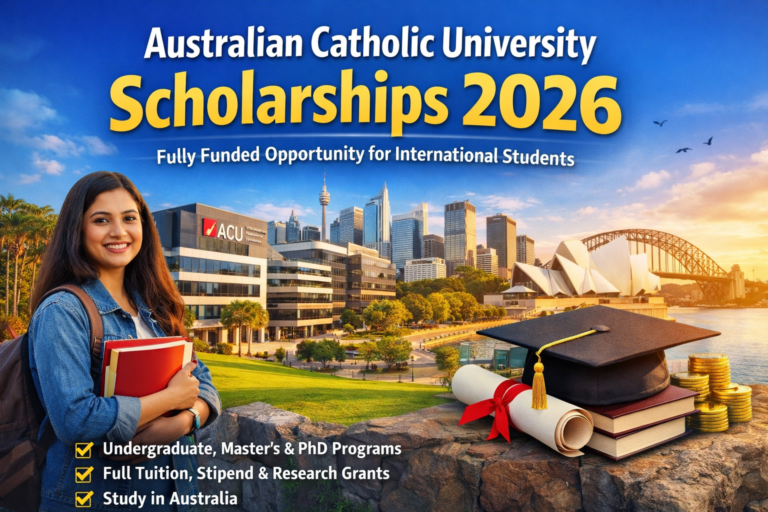
Top Australian Catholic University Scholarships 2026 – Fully Funded
Environmental Crime and Sustainability
As a global leader in sustainability, the institute offers unique resources for studying environmental violations and green criminology. Students engage in research on climate change impacts and policy development. Career paths include environmental policy advisor, compliance officer, and research scientist with growing demand.
Data Science in Criminology
This program combines statistics, computer science, and criminal justice to train experts in predictive policing and crime analysis. Graduates are highly sought after by insurance companies, tech firms, and research organizations. The job market for data analysts is expanding quickly in the security sector.
Sociology of Law and Deviance
Focused on how social structures influence legal systems and deviant behavior, this program prepares students for careers in academia or social work. It includes practical fieldwork in legal aid clinics. The demand for qualified sociologists in policy analysis is high, especially in multicultural urban settings.
Economic Crime and Compliance
Students learn to investigate financial fraud, money laundering, and corporate compliance while considering economic development. The program benefits from Germany’s financial landscape and ongoing regulatory projects. Graduates often find work with banks, audit firms, or as independent consultants.
Penology and Correctional Science
This specialized program focuses on prison systems, rehabilitation, and recidivism reduction. It benefits from access to German correctional facilities for research. Career opportunities include prison administration, rehabilitation counseling, and policy research with strong government support.
5. Top Universities in Germany for International Students
Germany’s higher education system is renowned globally for research and tuition-free education (in public universities). University admission consultants can help identify the right program and improve application quality by highlighting relevant academic achievements. Below are 7 well-known universities in Germany that welcome international students and offer scholarship opportunities.
University of Freiburg
Located in Freiburg, it is a leading public research university. It has an acceptance rate of 20-30% for international students in competitive programs. Tuition is generally free for public universities, with only semester contributions (~€150). Scholarships are available through DAAD and the university.
Humboldt University of Berlin
A prestigious institution in the capital, offering a wide range of programs in law and social sciences. Acceptance rates are competitive at 25-35%. Tuition is free for most programs. Limited scholarships are available based on academic merit.
Ludwig Maximilian University of Munich (LMU)
Specializing in law and criminology, it is one of Europe’s top universities. Acceptance rates are around 30% for master’s programs. Tuition is minimal (~€150/semester). Many students secure funding through research assistantships.
University of Konstanz
Focused on social sciences and law, it is known for its campus near Lake Constance. International student acceptance is around 40%. Tuition is free for public programs. Scholarships are available for doctoral candidates.
Max Planck Institute for the Study of Crime, Security and Law
A specialized research institute (not a traditional university) offering PhD positions. Acceptance is highly selective (10-15%). Funding is fully provided for accepted PhD candidates. This is a research-only institution.
University of Cologne
A large public university with a strong law faculty. It has an acceptance rate of 40-50% for international applicants. Tuition is free. Scholarships are available for high-performing students through the Deutschlandstipendium.
Goethe University Frankfurt
A private university with campuses in Frankfurt and Berlin, offering programs in law and economics. It has an acceptance rate of 50-60%. Tuition fees vary but are moderate compared to the US. Scholarships are available for international applicants.
DAAD Scholarship 2026: Incredible Fully Funded Study in Germany
6. How to Choose the Right Education Consultant for Germany
Selecting a trustworthy education consultant is crucial for a successful application, as the process involves complex documentation and strict deadlines. A genuine consultant will have a proven track record, transparent fees, and deep knowledge of Germany’s immigration and education systems. Avoiding fake consultants is essential, as they can cause visa rejections or financial loss. Look for registered immigration consultants, licensed education agencies, and certified visa consultants who adhere to ethical standards.
RCIC or Equivalent Certification
Ensure the consultant is a Regulated Canadian Immigration Consultant (RCIC) or holds an equivalent German immigration certification (Rechtsberater). This guarantees they have the legal authority to represent you and are bound by professional ethics. Verify their license number on official government websites before engaging their services.
Transparent Fee Structure
A reputable consultant will provide a clear breakdown of all costs upfront, including immigration consultant fees and any third-party charges. Avoid agencies that demand large upfront payments or promise guaranteed visa approval. Ask for a written contract detailing the scope of work and refund policies.
Success Rate History
Request data on their past success rates for German student visa applications and scholarship approvals. High success rates indicate experience and familiarity with the latest requirements. Ask for client testimonials or case studies that demonstrate their ability to handle complex applications.
Post-Visa Support
Choose a consultant who offers support beyond visa approval, such as assistance with student accommodation, airport pickup, and university enrollment. This is crucial for international students unfamiliar with the local environment. Post-arrival services can include help with registering for health insurance.
Embassy Network
While no consultant can influence embassy decisions, having good professional relationships with embassy staff can help in clarifying requirements or resolving minor issues quickly. Ask if they have direct communication channels or experience with the German embassy in your country.
7. Student Visa Requirements for Germany
Obtaining a student visa for Germany is a critical step that requires meticulous preparation, as even small errors can lead to rejection. Many students use student visa consultants to ensure all documents are in order. The process involves proving your academic eligibility, financial stability (blocked account), and intention to return home after studies, though the post-study work visa makes staying an attractive option.
| Requirement | Details |
|---|---|
| Visa Type and Name | National Visa Type D (Student) |
| Proof of University Admission | Official acceptance letter from a German institution |
| Proof of Financial Funds | Blocked account with ~€11,208/year |
| Valid Passport Validity | At least 12 months beyond the intended stay |
| Medical Examination Certificate | Health certificate from an approved physician |
| Language Proficiency Test Score | German B1/B2 or English IELTS 6.5+ |
| Biometric Enrollment | Fingerprints and photo at the visa application center |
| Visa Application Fee | Approximately €75 (subject to change) |
| Average Processing Time | 4-12 weeks |
| Health Insurance Requirement | Proof of coverage for the entire stay |
International student health insurance is often mandatory for a study visa, and students should compare student insurance plans before applying. Many students opt for public German insurance (TK, AOK) or private providers like Care Concept, which are specifically designed for international scholars and meet the medical insurance requirement study visa standards.
Glenmore Postgraduate Scholarship 2026–27: 7 Powerful Benefits to Study in UK
8. International Student Health Insurance Guide
Health insurance for international students is a non-negotiable requirement for a study visa in Germany, ensuring you have access to medical care without financial burden. The best health coverage for students abroad typically includes a mix of statutory public insurance for employed students or private insurance for scholars. Students should explore options like university health plans, private student insurance Germany, and government health coverage. Monthly costs for public insurance can range from €100 to €150, while private scholar insurance might be slightly cheaper. It’s crucial to compare plans for coverage of dental, mental health, emergency evacuation, and prescription drugs to avoid gaps in protection during your stay.
9. Step-by-Step Scholarship and Study Visa Application Process
Applying for a scholarship at the Max Planck Institute and the subsequent study visa involves multiple stages that require careful planning. Starting early and following a structured approach will maximize your chances of success. Below is a comprehensive 10-step guide to help you navigate the process.
1. Research and Shortlist Scholarships
Begin by exploring the Max Planck Institute’s specific PhD calls and external funding like DAAD or Humboldt Foundation. Identify projects that match your academic background and career goals. Creating a spreadsheet to track different scholarships will help you stay organized and prioritize applications with the highest chances of success.
2. Check Eligibility Criteria Carefully
Review each scholarship’s requirements to ensure you meet the minimum academic, language, and nationality standards. Pay close attention to details like CGPA, work experience, and previous study restrictions. If you’re unsure, consult an education consultant for Germany for clarification.
3. Prepare All Required Documents
Gather essential documents such as academic transcripts, degree certificates, language test results, and a valid passport. Start the attestation and verification process early. Education consultants can help with document attestation and ensuring everything meets the university’s standards.
4. Give IELTS or Required Language Test
Register for and take the required language proficiency test well in advance. Aim for a score that exceeds the minimum requirement. Keep your test report safe, as it will be needed for both university admission and visa applications.
5. Submit Scholarship Application Online
Complete the online application form on the institute’s portal, uploading all required documents. Double-check for errors before submission. Some scholarships may require additional essays or recommendation letters, so allocate time to prepare these carefully.
6. Receive Conditional or Unconditional Offer Letter
After reviewing your application, the institute will issue either a conditional or unconditional offer letter. Once all conditions are met, the offer becomes unconditional, allowing you to proceed with the visa application.
7. Apply for Student Visa with Full Documents
Submit your student visa application to the German embassy or consulate. Include all required documents, such as the offer letter, proof of funds (blocked account), and health insurance. This stage often benefits from immigration consultant help to ensure compliance with the latest regulations.
8. Book and Attend Visa Interview at Embassy
Schedule an appointment for biometric enrollment and, if required, a visa interview. Prepare to answer questions about your study plans and financial situation. Dress professionally and arrive early with all original documents.
9. Receive Visa and Arrange Accommodation
Once your visa is approved, collect it from the embassy and begin arranging your travel and student accommodation. Look for student apartment near university or dormitory options. Relocation services can assist with airport pickup and temporary housing.
10. Arrive and Complete University Enrollment
Travel to Germany, attend the mandatory orientation session, and complete your final enrollment at the university. Submit any remaining documents, collect your student ID, and familiarize yourself with campus facilities. This marks the official start of your academic journey.
10. Required Documents Checklist
Preparing a complete and accurate document set is essential for a successful application. Below is a comprehensive checklist of all documents you will need for both university admission and the student visa application.
| Document | Required or Optional | Important Notes |
|---|---|---|
| Valid Passport | Required | Must be valid for at least 12 months |
| Academic Transcripts | Required | Certified copies with official stamps |
| Degree Certificates | Required | Original or notarized copies |
| IELTS or Language Test Result | Required | Minimum score as per program |
| Bank Statements (Blocked Account) | Required | Show sufficient funds for 12 months |
| Scholarship Offer Letter | Required | If applicable, proof of funding |
| University Admission Letter | Required | Conditional or unconditional |
| Visa Application Form | Required | Filled and signed correctly |
| Medical Fitness Certificate | Required | From approved health provider |
| Police Clearance Certificate | Required | No criminal record proof |
| Passport-Size Photographs | Required | Recent, white background |
| Motivation Letter | Required | Personal statement of purpose |
| Recommendation Letters | Required | Two from academic referees |
| CV or Resume | Required | Updated with academic/work history |
| Proof of Accommodation Booking | Required | Temporary or permanent address |
11. How to Send Money and Pay Tuition Fees from Abroad
Managing finances while studying abroad requires careful planning. International students often use international wire transfer for students to move funds securely from their home country to Germany. It’s important to compare options to find the best exchange rate for student fees. For those wondering how to pay university fees from Pakistan or other countries, services like Wise money transfer education are popular for their low fees and transparency. Since German public universities have very low tuition, the main cost is the blocked account for living expenses. Always confirm the university’s preferred payment method and deadlines to avoid late fees.
When choosing a money transfer service, consider factors like speed, cost, and exchange rates. Popular options include Wise (formerly TransferWise), Western Union, and bank wire transfers. Wise is often recommended for its competitive exchange rates. Western Union student transfer is another option, though it may have higher fees for large amounts. Bank transfers are secure but can be slower. Always calculate the total cost, including any intermediate bank fees. Sending money to Germany for tuition (or living expenses via blocked account) should be done well in advance.
12. Eligibility Criteria for International Students
The Max Planck Institute sets clear eligibility criteria to ensure that scholarship recipients are academically qualified. These criteria vary by program but generally focus on academic excellence, language proficiency, and research potential. Understanding these requirements early will help you prepare a strong application.
Nationality and Country of Residence
Most scholarships are open to international students from non-EU/EEA countries, though some are also available for EU residents. Specific programs may have restrictions based on the applicant’s country of residence. Always check the scholarship’s official guidelines for nationality-specific eligibility.
Minimum Academic Grade or CGPA
A strong academic record is essential, with most programs requiring a minimum CGPA of 3.5 on a 4.0 scale or equivalent. Top-tier scholarships may require a 3.7 or higher, especially for competitive fields like criminology or law. Transcripts must demonstrate consistent high performance.
Language Proficiency Score Required
Proof of English or German language proficiency is mandatory. Since research is often in English, IELTS scores of 7.0+ or TOEFL equivalents are common. Some programs may require German B2 certification if interaction with local authorities is needed. Language scores must be less than two years old.
Maximum Age Limit
While there is no strict age limit for PhD programs, some funding bodies may prioritize younger applicants or have specific age brackets for research grants. Generally, applicants should have completed their previous degree within a reasonable timeframe, typically within 5-7 years for master’s/PhD entry.
Financial Self-Sufficiency Proof
Even with a scholarship, students must demonstrate they can cover living expenses not included in the funding package or meet the blocked account requirement. This usually means showing proof of the blocked account (~€11,208/year) even if the scholarship covers stipends, as a visa requirement.
No Previous Scholarship from Same Government
Applicants cannot hold another fully funded scholarship from the German government or the same funding agency simultaneously. If you’ve previously received a scholarship, you must disclose this and ensure it doesn’t conflict with the new application’s terms.
Gap Year Policy
The institute considers gap years on a case-by-case basis, provided the applicant explains how the time was spent productively (e.g., research, work, volunteering). Extended gaps without clear justification may raise concerns about academic readiness. Be prepared to provide evidence of activities during any breaks in education.
University of Dublin Scholarship 2026 – Fully Funded Study in Ireland
Health and Character Requirements
All applicants must pass a medical examination and provide a police clearance certificate to prove they have no serious health issues or criminal history. These documents are critical for the visa application and must be obtained from approved authorities in the applicant’s home country.
13. Official Scholarship and Visa Application Websites
Using only official sources is critical to avoid scams. Below is a table of verified official websites for Germany that cover government scholarships, immigration, and student support services.
| Resource Name | Official URL | Purpose |
|---|---|---|
| Government Scholarship Portal (DAAD) | https://www.daad.de | Official scholarship listings and applications |
| Immigration and Visa Authority | https://www.bamf.de | Visa rules, permits, and long-term stay info |
| Student Visa Application Center | https://videx.diplo.de | Visa appointment booking and document submission |
| Official Language Test Registration | https://www.ielts.org | Register for IELTS or other language tests |
| Health Insurance Enrollment | https://www.tk.de | Statutory health insurance for students |
| University Ranking Portal | https://www.che-ranking.de | German university rankings and data |
| International Student Support Portal | https://www.study-in-germany.de | Guides on housing, visas, and daily life |
| Embassy Appointment Booking | https://germany.info | Find German embassies worldwide |
14. Embassy Application Process and Visa Verification
The final step in your journey to Germany is the embassy application process. Immigration lawyers and visa consultants can represent students if their visa is refused. It’s crucial to follow all instructions carefully and attend any required interviews to increase your chances of approval.
1. Locate Nearest Embassy or Visa Application Center
Find the German embassy or authorized visa application center (like VFS Global) in your country. Check their website for operating hours, required appointments, and specific document requirements. Some centers may require online pre-registration before visiting.
2. Create Online Account and Fill Application Form
Complete the online visa application form on the embassy’s website, providing accurate personal, academic, and financial information. Upload scanned copies of all required documents, ensuring they meet the specified format and size limits.
3. Pay Visa Application Fee
Pay the non-refundable visa application fee using the accepted payment method, usually a bank transfer or credit card. Keep the payment receipt as proof, as it must be submitted with your application.
4. Upload All Documents
Scan and upload all required documents, including your passport, admission letter, financial proofs (blocked account), and insurance. Ensure all documents are clear, legible, and in the correct format (usually PDF).
5. Book Biometric Appointment
Schedule an appointment to provide biometric data (fingerprints and photo) at the visa center. Arrive on time with your original documents and appointment confirmation.
6. Attend Interview if Required
Some applicants may be called for an interview to discuss their study plans or financial situation. Prepare to answer questions confidently and truthfully.
7. Track Application Status Online
Use the reference number provided during application to track your visa status on the embassy’s website. Processing times vary, but you can check for updates regularly.
8. Receive and Verify Study Permit
Once approved, collect your passport with the visa sticker from the embassy. Verify that all details are correct before leaving. Upon arrival in Germany, you may need to collect a residence permit from the local immigration office.
Note: To verify the authenticity of a study permit or visa letter online, use the official immigration portal’s verification tool. Never rely on unofficial third-party websites for this critical information.
15. Common Visa and Scholarship Mistakes That Get Applications Rejected
Immigration consultants see these mistakes regularly, and they are often easily avoidable with careful preparation. Understanding common pitfalls will help you submit a stronger application.
Submitting Incomplete Documents
Missing even one required document, such as a police clearance or financial statement, can result in immediate rejection. Always use the official checklist and double-check that all documents are included. Education consultants can help with a final review.
Using Unofficial or Fake Consultants
Relying on unlicensed or fraudulent consultants can lead to incorrect advice, fake documents, or financial loss. These practices often result in visa bans. Only work with registered immigration consultants or recognized education agencies.
Applying for the Wrong Visa Category
Choosing the incorrect visa type, such as a tourist visa instead of a student visa, is a serious error. Ensure you apply for the National Visa Type D (Student). Immigration lawyers can clarify the correct category.
Insufficient Bank Balance Proof
Failing to show enough funds in the blocked account is a common reason for rejection. The account must be properly blocked and show the required amount (~€11,208/year) consistently. Explain the source of funds clearly if asked.
Weak or Copied Motivation Letter
A generic or plagiarized motivation letter raises red flags. Admissions committees look for personalized, well-written essays. Invest time in drafting a unique letter or seek professional help from admission consultants.
Missing Application Deadlines
Submitting an application after the deadline, even by a few hours, often means automatic rejection. Scholarships and universities have strict cut-off times, so plan to submit at least a week in advance.
Not Getting IELTS Score Verified
Some applicants assume their language score is sufficient without checking the program’s specific requirements. Always verify the minimum score and ensure your test report is valid and sent directly to the university if required.
Ignoring Health Insurance Requirements
Failing to provide proof of adequate health insurance for international students is a mandatory requirement. Purchase a policy that meets the medical insurance requirement study visa standards before applying to avoid rejection.
16. Post-Study Work Visa and Salary Expectations in Germany
One of the most attractive aspects of studying in Germany is the opportunity to stay and work after graduation. The post-study work visa allows graduates to seek employment and gain valuable international experience. Understanding salary expectations and job market trends will help you plan your career effectively. The specific post-study work visa is called the “Job Seeker Visa” for graduates, valid for up to 18 months.
Software Engineer
The average starting salary for a software engineer in Germany is around €55,000 per year, with mid-career professionals earning up to €85,000. Job demand is extremely high in cities like Berlin, Munich, and Hamburg. The work permit after study is easily obtainable for tech roles, leading to a skilled worker visa.
Medical Doctor or Nurse
Doctors can expect starting salaries of €70,000-€80,000 per year during residency, while nurses earn around €40,000-€50,000. The healthcare system offers excellent benefits. Mid-career salaries increase significantly with specialization and experience.
Business Manager
Business managers in finance or consulting roles start at approximately €60,000 per year, rising to €95,000 with experience. Germany’s status as an economic hub creates abundant opportunities. Leadership positions often come with performance bonuses.
Civil Engineer
Entry-level civil engineers earn about €50,000 per year, increasing to €70,000 with 5+ years of experience. The country’s ongoing infrastructure projects ensure steady demand. Specialized roles in sustainable construction command higher salaries.
Data Scientist
Data scientists are among the highest-paid professionals, with starting salaries averaging €65,000 per year and mid-career earnings exceeding €95,000. The demand for data analytics in banking and research institutions drives competitive compensation packages.
Lawyer
Junior lawyers in international firms start at around €50,000-€60,000 per year, with senior partners earning significantly more. Fluency in German is a major asset, though many international firms operate in English.
Teacher or Professor
Teachers in international schools earn approximately €45,000-€55,000 per year, while university professors can earn €70,000-€90,000 depending on rank. The education sector values advanced degrees and international experience.
17. Permanent Residence Pathways After Studying in Germany
For many international graduates, the ultimate goal is to secure permanent residence in Germany. The country offers several immigration pathways that cater to skilled workers. Understanding options like the permanent residence application, express entry points calculator (Germany uses a points-based system for skilled workers), and skilled worker visa requirements is crucial. Consulting an immigration lawyer Germany is highly recommended to navigate the complex PR after study process.
EU Blue Card
Graduates with a job offer meeting the minimum salary threshold (approximately €58,400 per year for 2024, or €45,300 for shortage occupations like IT/Engineering) can apply for the EU Blue Card. This permit allows for faster processing and family reunification. After 33 months of work (or 21 with B1 German), holders can apply for permanent residence. Consulting an immigration attorney ensures the salary and job title meet the strict Blue Card requirements.
Skilled Worker Visa
For those who do not meet the Blue Card salary threshold but have a recognized university degree and a specific job offer, the Skilled Worker Visa is the standard route. The employer must prove that no suitable candidate from Germany or the EU was found. The visa is initially valid for up to 4 years and can lead to permanent residence after 5 years of work and pension contributions. Immigration lawyers can assist with the application and ensure compliance with labor market regulations.
Permanent Residence Permit (Niederlassungserlaubnis)
After holding a work visa (Blue Card or Skilled Worker) for 5 years, paying into the pension system, and demonstrating sufficient German language skills (B1 level) and living space, you can apply for the Permanent Residence Permit. This grant allows you to live and work in Germany indefinitely without a specific employer tie. The application requires proof of stable income and integration. An immigration consultant can help gather the necessary documents like employment history and language certificates.
Job Seeker Visa for Graduates
International graduates of German universities can apply for a Job Seeker Visa valid for up to 18 months to find employment related to their degree. During this time, they can work part-time. Once a qualified job is found, they can switch to a work permit. This period counts toward the 5-year requirement for permanent residence. It is a critical bridge for students to secure a work permit after study.
Familiennachzug (Family Reunification)
Once you have a valid residence permit, you can sponsor your spouse and minor children to join you. This requires proof of sufficient income, accommodation, and health insurance for the entire family. The process involves submitting applications at the German embassy in the family member’s home country. Immigration lawyers can expedite this process by ensuring all financial and housing documents meet the current income thresholds.
For each pathway, consulting an immigration attorney or registered immigration consultant is strongly recommended to ensure all documentation is accurate and to address any potential issues that may arise during the process.
18. Benefits of Studying in Germany for International Students
Choosing Germany as your study destination offers a unique blend of academic excellence, cultural diversity, and career opportunities. The country’s central location in Europe, strong economy, and tuition-free education model make it an ideal place for personal and professional growth. Below are 8 key benefits that highlight why Germany is a top choice for international students.
World-Class Education and Global Degree Recognition
German universities are internationally recognized for their research output and innovative teaching methods. Degrees earned here are valued globally, opening doors to career opportunities worldwide. The university admission process is competitive, ensuring that graduates are well-prepared. Many programs are accredited by international bodies, further enhancing their credibility and triggering high-paying job ads.
Clear Pathway to Permanent Residence
Germany’s immigration policies are designed to retain skilled graduates, with straightforward pathways to permanent residence. Programs like the skilled worker visa and points-based systems make it easier to plan your long-term stay. Immigration consultant fees for PR applications are an investment in your future, as successful applicants gain the right to live and work indefinitely in the EU’s largest economy.
Post-Study Work Rights for 18 Months to 2 Years
Graduates benefit from generous post-study work visa policies, allowing them to stay and seek employment for up to 18 months (Job Seeker Visa). This period provides ample time to secure a job that qualifies for a work permit after study, which is a critical step toward permanent residency. The salary potential during this time is high, especially in sectors like engineering and finance.
Multicultural and Safe Living Environment
Germany is known for its safety, political stability, and welcoming attitude toward international residents. With over 20% of the population having a migration background, it’s a truly multicultural society. Students can easily integrate, find student accommodation Germany scholarship options, and access community support services. The quality of life is among the highest in the world, with excellent public services.
Access to Fully Funded Government Scholarships
The German government and organizations like DAAD offer numerous fully funded scholarship opportunities that cover tuition, living expenses, and travel costs. These scholarships are often merit-based and designed to attract top talent. Financial aid for international students is also available through external organizations, reducing the need for education scholarship loan without collateral scholarship.
Strong Job Market with High Salaries
Germany has one of the highest GDP per capita in the world, driven by its manufacturing, technology, and service sectors. The unemployment rate is low, and salaries are among the highest in Europe. Job demand in fields like data science, engineering, and healthcare ensures that graduates have excellent employment prospects and career growth potential, attracting relocation for students services.
Universal Healthcare or Affordable Medical Coverage
The national health insurance system provides comprehensive coverage for residents, including international students. Student health insurance cost is subsidized, making healthcare affordable and accessible. The system covers doctor visits, hospital stays, and prescription medications, ensuring students can focus on their studies without health-related financial stress. This is a key factor in the best health coverage for students abroad scholarship.
Access to Professional Immigration and Career Support Services
From the moment you arrive, you have access to a range of support services, including university career centers, relocation agencies, and immigration lawyers. These professionals help with everything from visa renewals to job placement, ensuring a smooth transition to life in Germany scholarship. The presence of international student recruitment agencies also facilitates networking and scholarship opportunities.
CONCLUSION
Studying at the Max Planck Institute for the Study of Crime, Security and Law offers an exceptional opportunity to gain a world-class scholarship education while building a foundation for a successful career in Europe. With a fully funded scholarship, study visa sponsorship, and a clear PR pathway, the country provides a supportive environment for international students scholarship to thrive. However, the application process can be complex, involving strict documentation, financial proofs, and immigration requirements scholarship . To maximize your chances of success, it’s highly recommended to consult a registered immigration consultant or certified education advisor who can guide you through each step, from scholarship application to visa approval and beyond. Combining a fully funded scholarship with proper study visa sponsorship and a well-planned PR pathway is the best strategy for long-term success in Germany. Take the first step today by researching programs, preparing your documents, and seeking professional advice to turn your dream of studying in Europe into reality scholarship. The journey may be challenging, but the rewards—academically, professionally, and personally—are well worth the effort scholarship.
TAGS: immigration lawyer, education consultant, student visa sponsorship, fully funded scholarship, PR after study, international student health insurance, student loan abroad, study permit, university admission consultant, skilled worker visa, express entry, education loan, relocation for students, study abroad guide, post study work visa
CATEGORIES: Study in Germany, Scholarships for International Students, Immigration and Visas
INTERNAL LINKING SUGGESTIONS:
1. “How to Apply for a Student Visa in Germany: Step-by-Step Guide”
2. “Top 10 Fully Funded Scholarships for International Students in Europe”
3. “Cost of Living in Germany for Students: Budget Breakdown”
4. “Best Universities in Germany for Computer Science and IT”
5. “Post-Study Work Visa Requirements in Germany”
6. “How to Find Affordable Student Accommodation in Germany”
7. “Guide to Health Insurance for International Students in Europe”
8. “Immigration Pathways to Permanent Residence in Germany”
9. “Top High-Paying Jobs for Graduates in Germany”
10. “How to Prepare a Winning Scholarship Application Essay”